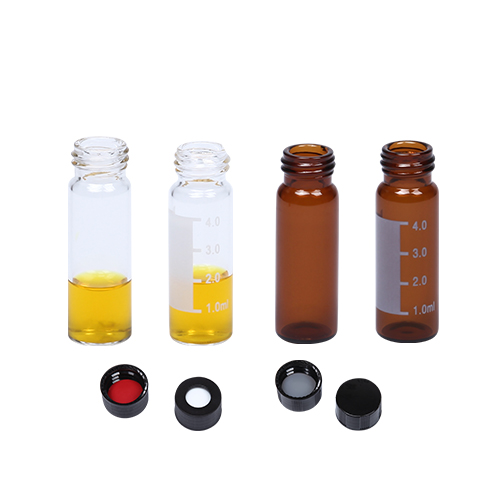
The content expressed in this article is Some introductions about 2ml Crimp Vial please feel free to contact me.
The injection bottle and 2ml Crimp Vial are the most basic tools for the experimental process, especially the chromatographic experiment process. However, it is difficult to find some valuable information about the sample bottle on the Internet - except for promotional materials and advertisements.
Let me talk about the importance of the 2ml Crimp Vial during the experiment:
Although the autosampler seems to be insignificant compared to many sophisticated analytical instruments used in the laboratory, the incorrect use of the vial or cap or pad can have a significant impact on the experiment, resulting in experimental efficiency and repeatability. Reduced.
Potential problems with incorrect use of vials/caps/slits include:
Loss of analyte due to volatilization
Chromatographic peaks produced by solvent and septum
Mechanical damage to the autosampler
Injectability is poor, etc.
The poor quality of the glass is mainly poor in water resistance and acid and alkali resistance. When the long-term storage is required, the difference between the good and bad of the glass comes out. When the poor glass is stored for a long time, the inner wall will fall off and interfere with the sample. .
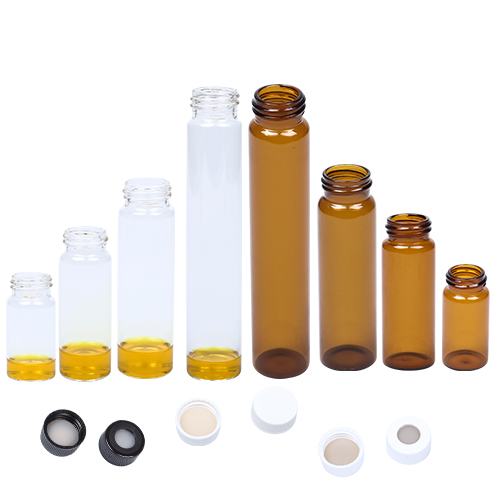
Let's talk about the material of the 2ml Crimp Vial:
Most of the vials are made of glass. When talking about this material, we must first talk about the linear expansion coefficient, which means that the temperature changes every one degree of temperature change. In short, it is the ability of glass to withstand extreme temperature changes. The lower the coefficient of linear expansion, the greater the temperature change that the glass can withstand.
The classification of laboratory glass is based on USP (United States Pharmacopoeia) based on its water resistance.
USP Type 1, Class A, 33 Borosilicate glass is the most chemically inert glass and is widely used in laboratories, especially for chromatographic applications. Class I glass consists mainly of silicon and oxygen and contains traces of boron and sodium. It has the lowest dissolution rate and a linear expansion coefficient of 33.
USP Type 1, Class B, 51 Borosilicate glass is mainly composed of silicon and oxygen. It contains trace amounts of boron, sodium and alkali metals with a higher content than grade A glass, but it can still be used for laboratory purposes. All brown glass is Class B glass with a linear expansion coefficient of 51.
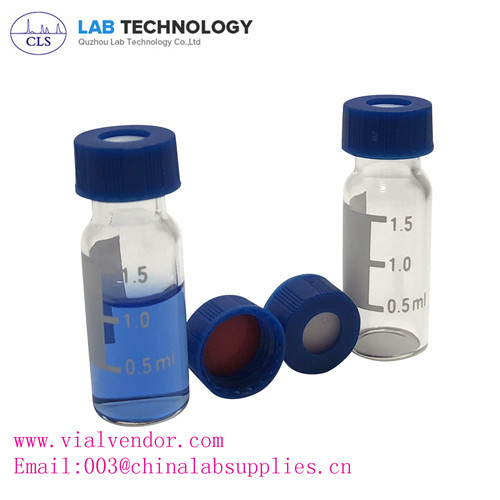
Silanized or deactivated glass is a deactivated borosilicate glass that is organosilylated on the surface of the glass. The glass surface is highly hydrophobic and inert, suitable for pH sensitive compounds, trace analysis and Long-term sample storage. USP Types II, III and NP soda lime glass are less chemically resistant than borosilicate glass.
In addition to the glass material, there are some other materials:
Polypropylene (PP) is a hard material that can be processed into a variety of colors and has good chemical resistance, suitable for short-term storage of most laboratory chemicals. The tolerance is attenuated over time when aromatic hydrocarbons or halogenated hydrocarbons are used. PP vials are commonly used for ion chromatography due to their low ion content and can be washed with dilute acid and deionized water. The PP vial also reduces the exposure of hazardous materials as it can be directly incinerated after sealing.
Polymethylpentene (TPX) is a hard, transparent material with a high melting point and a range of 0°-170°C. Due to its high transparency, TPX vials can replace opaque PP. Its chemical resistance is similar to PP, and TPX vials are typically used where visual samples or high temperature applications are required. The TPX vials are brittle at room temperature.